

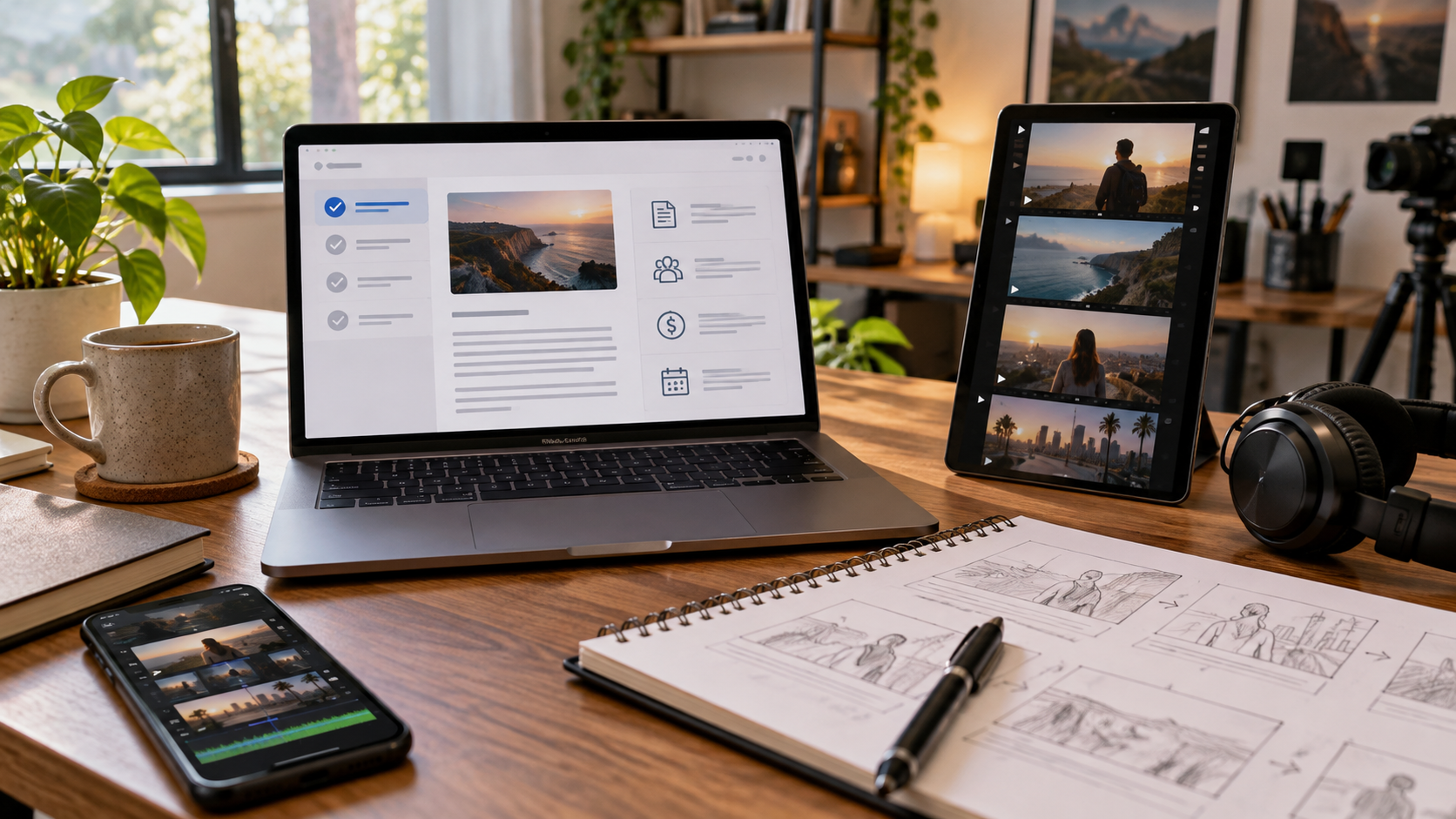
Video editing gets harder when the basic decisions arrive halfway through the project. A short brief gives you a place to settle the message, footage, and final deliverables before the timeline fills up. You can use it for your own work or adapt it for a client.
Define the viewer and the job
Write who the video is for and what it should help them understand or do. “People who need a simple way to organize receipts” is more useful than “everyone online.” Then write the main message in one sentence. If the video tries to explain three unrelated ideas, consider whether it needs to become three separate pieces.
List what you have and what is missing
Inventory the source footage, voiceover, product images, logo, and reference material. Identify which assets are approved for use and where they are stored. A reference can show pacing or tone without giving permission to copy its footage or script. Mark missing assets before editing begins so you know which sections depend on them.
Specify the deliverables
Include the intended viewing orientation, approximate duration, required versions, captions, cover, and delivery format. Explain whether you need a clean version without music or overlays. If requirements come from a destination platform or a client, verify those requirements for the actual project rather than relying on an old template.
Write the sequence in plain language
Try five lines: opening problem, main demonstration, supporting detail, result, and next step. Add exact wording only where it matters, such as a product name or approved offer. Identify any section that must remain intact. This gives the editor room to work while protecting the message.
Agree on review
For client projects, clarify who gives consolidated feedback, how revisions are handled, and when approval is due. For your own projects, set a review limit so small changes do not consume the day. Separate corrections, such as a wrong word, from changes in direction, such as a different audience or offer.
Copy this starter brief
- Viewer: Who is watching?
- Purpose: What should they understand or do?
- Main message: One sentence.
- Assets: Approved files and missing items.
- Sequence: Opening, demonstration, result, next step.
- Deliverables: Versions, captions, cover, and files.
- Review: Reviewer, deadline, and revision process.
Fill it in before your next edit. For help defining the work itself, read our one-page service offer guide.